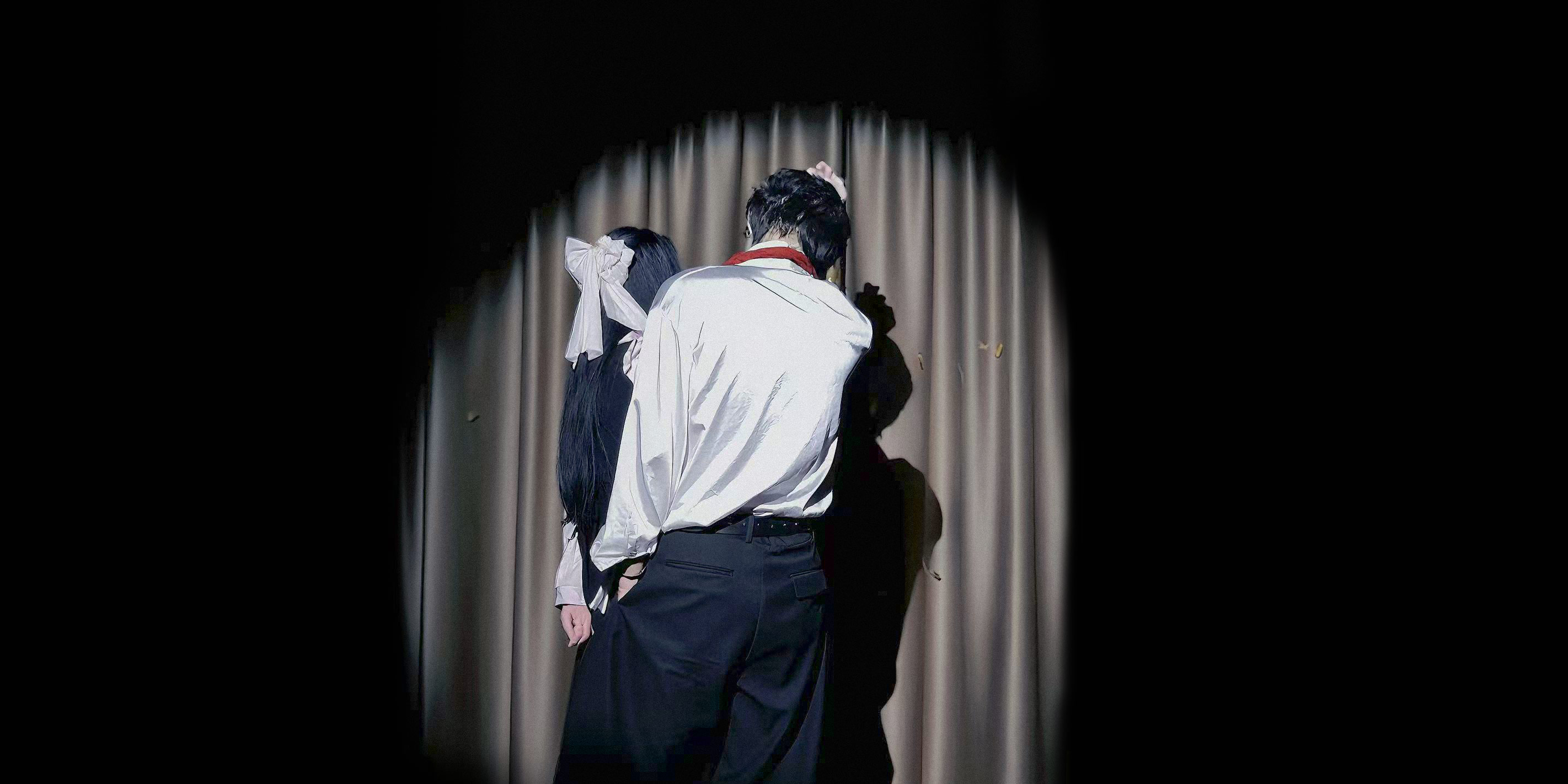
In China’s Scripted Romance Games, Staged Love Is Paid Work
Xiao has watched the man she loves die more than 10 times. He sacrifices himself for her, calls her the luckiest thing in his life, and, at the end, tells her: “This time, don’t look back.”
She comes back anyway. He’s paid to say it. And Xiao pays to hear it.
That final scene comes from a role-playing game. For eight hours every few weeks in Shanghai, 24-year-old Xiao plays a woman who must save her people, loved by a man later revealed to be a god, and fated to lose him to his sacrifice.
The games are part of a fast-growing format in China known as “emotional scripts,” a romance-driven offshoot of jubensha, the script-based murder-mystery games that surged in popularity in the past decade. Instead of racing against the clock, players spend hours inhabiting tragic lovers, estranged relatives, or doomed heroes.
A session can run for hours and cost hundreds of yuan, but Xiao insists it’s worth it. “A man dies for you once, then again, and again, always choosing you without hesitation,” she tells Sixth Tone, using only her surname to protect her privacy. “Just experiencing and remembering that feeling is already enough for me.”
Making that feeling land is the work of a lianpei — literally a “love companion” — a paid non-playable character (NPC) assigned as a player’s romantic partner. Many play the same lover day after day, delivering the same lines to different customers, expected to make each one feel personal.
On social media, clips of costumed embraces, princess carries, and near-kisses circulate widely, funneling newcomers into an offline business built on intimacy. Commercial data shows that approximately 168,000 companies now operate in script-based entertainment, including roughly 72,000 founded in 2025, up about 16% from the year before. Shanghai alone had around 800 venues in 2023, the most of any city nationwide.
To meet rising demand, venues are turning out new scripts faster than before. Most romance-focused games now include “dark room” scenes — private one-on-one storylines between a player and a love companion.
Several performers told Sixth Tone that faster production has weakened the writing, forcing performers to improvise key scenes and maintain what players call a “bond,” particularly with repeat customers who return expecting the same intensity, and sometimes the same lines.
Though regulators have tightened oversight of the industry, including restrictions on minors and surveillance requirements, enforcement varies by venue.
How much physical contact is permitted, what happens in private scenes, and whether the relationship continues after the game often comes down to what the player wants and what the performer will tolerate.
Repeat romance
At her peak, Xiao played two to three games a week, sometimes spending more than 1,000 yuan ($145) to make the session happen.
“Emotional scripts are much more intense than real-life relationships,” she tells Sixth Tone. “You get to experience kinds of love-hate drama you can’t experience in real life, whether it’s across family bonds, romance, or friendship.”
Sessions play out in small rooms, often tucked into commercial office buildings and sometimes inside shopping malls, where a dungeon master assigns roles and drives the pacing through confession, betrayal, and sacrifice.
“You enter the story as the protagonist, experiencing everything your character goes through,” Xiao says. “That makes the emotional impact much deeper.” The romance, though, depends on who is cast opposite her. In the scripts, as in life, she prefers “lovers” who offer grand, unconditional devotion.
“If you join a random group, half of your experience depends on the player cast as your in-game partner. And the quality of male players in emotional scripts varies a lot,” she explains, recalling men who ignored the game to play on their phones.
It’s why more players gravitate toward NPCs, who are seen as more dependable than fellow participants, especially for women seeking devoted in-game partners. As repeat customers return to the same stories, performers are left to carry more of the emotional weight.
Yan Qi, a 22-year-old dungeon master from Shanghai with five years of experience, says that as scripts have grown weaker, performers are given more room to adapt and improvise. “I can direct as many as ten different endings for a single script,” he adds.
That flexibility keeps players coming back. In Beijing, Zhuang Zhuang, 23, has replayed the same script four times, each with a different ending. The story, she said, drops six modern strangers into a fantasy world after they drink a specially mixed cocktail, waking with their memories wiped and a mission to uncover the origins of its “six realms.”
Even players who consider the writing imperfect return for the shifting cast dynamics and the way each run can unlock a different arc. “It’s the bond,” she says. “Even if the script isn’t perfect, the interaction feels different every time. You want to see if there’s another ending waiting for you and your partner.”
Xiao says improvisation is part of the appeal, with each session unfolding differently, rotating NPCs, and dungeon masters who introduce new plotlines.
Repeat players now form the backbone of the business. “In a typical week, only one or two of the people booking me for love companion roles are first-time players,” Yan explains, adding that many pay extra to secure popular NPCs, and some even subsidize other roles to ensure a session goes ahead.
“To play the character you love, you pay a huge price and humble yourself completely,” says Xiao. “For dungeon masters and NPCs, it’s daily work. They perform for you the same way they perform for everyone else. They don’t feel how much effort you made to gather the group, how much you sacrificed.”
Close contact
But they do feel the pressure.
One woman has come to Yan 77 times this year, replaying the same script more than 10 times.
“She sat next to me, saying, ‘Talk to me. Why aren’t you talking? You know how to build bonds. You said this line last time — why not this time?’ It was exhausting,” Yan recalls.
He said the repeated comparisons and complaints made him furious. Eventually, they stopped speaking. “If you don’t like me anymore, just leave,” he told her. “Like the seventh-year itch leading to a breakup.”
When Yan first started in script games, he was motivated by curiosity and connection. “I used to end a performance wondering, ‘Were they happy? Will they fall in love with this world because of this?’ But now I ask myself, ‘Did I do OK today?’”
Gan Shiyuan, 19, who began working as a part-time dungeon master two years ago, said male love companions are often “mythologized,” particularly as female players have come to dominate the genre. “A dungeon master needs to control the game flow and handle tasks that belong to a host. Many people have lost sight of their priorities,” she says.
Yan agrees. He once focused on pacing and performance, but now prioritizes appearance. “Two years ago, I didn’t wear makeup. But now people say, ‘Even male models wear makeup when they go out to make a living. You’re providing a romantic experience. You need to be aware of makeup.’”
With most players expecting some degree of intimacy, he calibrates physical contact to each customer’s response during sessions. He starts small, brushing a hand or lightly touching their fingers. “If she doesn’t pull away, that means I can take a small step further.”
“I’ll reach out my hand. As long as I’m natural, they almost always take it. Once they do, I’ll say something like, ‘You’re willing, huh?’ Even if she tries to loosen her grip, I’ll apply just a bit of pressure — not forcefully — unless she’s clearly pulling away strongly or feels disgusted, which basically never happens. Then I’ll slowly pull my hand back a little and ask, ‘What’s wrong? Not willing?’”
Hand-holding and hugging are common, he adds, sometimes followed by a forehead kiss. Yan avoids touching the waist and is more cautious about shoulder hugs when customers are dressed more revealingly.
With few formal guardrails, the stakes are higher for female love companions, according to Gan, who worked part time while still in high school, attending classes during the day and running games three to four evenings a week.
This year, the overwhelming majority of her roles involve playing someone’s girlfriend, alongside characters such as sisters or mothers. With male players, she says, the most she usually accepts is a hug.
“Some players give me a feeling, or their behavior gives me feedback, that makes it very clear I cannot have much physical contact with them, or I’ll feel unsafe,” she adds. “Some men are polite or shy, and with them I might allow a little more.”
Even then, lines have blurred. During one scene, her character’s partner was meant to fasten a bracelet on her wrist. In the dim room, she felt his hand slide up her arm inside the loose sleeve of her costume.
“This kind of physical contact was completely unexpected. I froze. My first reaction was to look at the lead dungeon master, who was also stunned.”
The customer stopped at her upper arm. Gan said she kept her distance for the rest of the session, using physical space to signal that a boundary had been crossed. In her experience, she adds, customers with a “conscience” recognize the signal and usually stop.
Male and female love companions operate under different limits, she says. With female players, male companions rarely worry about safety and can physically stop inappropriate behavior if needed. “If a male player crosses a boundary, we often can’t be sure we can protect ourselves.”
With the number of emotional script venues surging in recent years, authorities have begun tightening oversight. Since 2022, national regulators and several local governments, including Shanghai’s, have introduced rules restricting minors’ access and requiring venues to install surveillance systems covering gameplay areas.
But enforcement varies by venue. Some operators say their rooms are fully monitored. Others acknowledge that not all spaces, particularly private “dark room” scenes, are covered.
Many rooms, Gan said, still lack cameras. Dark room private scenes between love companions and their in-game partners often take place in separate rooms. “That’s really scary,” she says.
Off the stage
For some love companions, gigs extend beyond the game. After sessions, they exchange contact information with players and continue the storyline by text, sending what they call “after-sale” messages.
Zhuang, the player from Beijing, tells Sixth Tone that crushes are common. “When you meet someone for the first time, you don’t know if they have a girlfriend. After experiencing such an intense romantic storyline together, it’s natural to see them through a filter,” she says.
“As a player, you have to pull yourself out. But if you happen to meet a dungeon master who continues texting or flirting with you, honestly, it becomes very difficult.”
Yet Gan underscores that performers have a duty to manage the line between character and self. “When a player becomes unable to separate the character from the person and falls intensely in love with the dungeon master, the dungeon master bears part of the responsibility. They didn’t actively manage the balance,” she says.
Some customers developed crushes on her and messaged her frequently. “I usually reply very coldly, and after a while, those male players calm down.” She adds that some venues even encourage performers to cultivate crush-like dynamics to drive repeat business.
Yan takes a different approach. A popular love companion who plays more than 30 games a month, he sometimes asks customers he likes to meet outside the game and “develop an ambiguous relationship.” After the session, he says, he contacts them only “as himself.”
“My in-character and out-of-character states are completely different. Even if the customer can’t distinguish the two, I can make sure they do,” he says. “I’m good at ambiguity. If I didn’t use my ability to ‘be romantic’ in my job, how could I do romance companionship at all?”
He acknowledges, however, that many women would hesitate to date someone whose job involves staged romance. Yan once overheard customers asking, “How is this any different from hiring a gigolo?”
Some of the roles he plays reinforce that perception. In certain scripts, his character is cast as a “submissive dog” or required to kneel. He accepts it as part of the performance, but says it crosses a line when customers repeat the language outside the scene or ask him to kneel for their own amusement.
Gan believes most scripts reduce female love companions to stereotypes: the petite girl next door or the seductive woman in a red dress with curled hair. “Just exaggerated femininity,” she says. “Male characters don’t suffer from this as much.”
Still, she stays because of the work itself. Performing gives her a sense of control over the rhythm of a room, and each cast brings a different chemistry. “People become dungeon masters because they genuinely enjoy it,” she says. “We don’t actually earn much, and the work is physically draining.” Working part time, she makes about 300 to 400 yuan per game.
Yan, who works full time, earns around 14,000 yuan a month, including a base salary and per-game bonuses. He takes pride in execution, such as syncing music and lights, timing props, and coordinating with other dungeon masters. “I want to bring something to people,” he says. “I hope every player who walks out of the room leaves with joy, or a lesson.”
Gan has fallen in love dozens of times on stage, often for customers who will return to someone else the next night. What still surprises her is when a player, speaking in character, says something that feels unscripted.
“Reality doesn’t have the fantastical settings of a script — no magic, none of that. And unlike NPCs, we can’t live or die for someone so easily,” she says. “But the qualities of loving someone, and the happiness of being loved, those things make me believe in love even more.”
Contribution: Jiang Xinyi; editor: Apurva.
(Header image: Zhuang Zhuang (left) interacts with a “love companion” during an emotional script game in Beijing. Courtesy of Zhuang)